 Dec 04,2025
 By: Sachin Yaduwanshi
Overview
So—let’s get this out right from the start—the Taj Mahal Location is one of those things everyone thinks they already know because hey, the Taj Mahal Agra India is literally printed on postcards, travel brochures, Instagram reels… everything. But then, somewhere between dreamy photos and history lessons, reality hits: Where exactly is it? Like, really—where?
And suddenly you’re googling Taj Mahal location in India, triple-checking maps, and wondering if you're accidentally booking a hotel three hours away. (Embarrassingly relatable? Yep.)
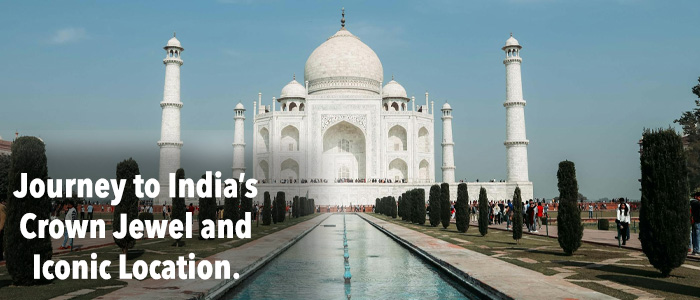
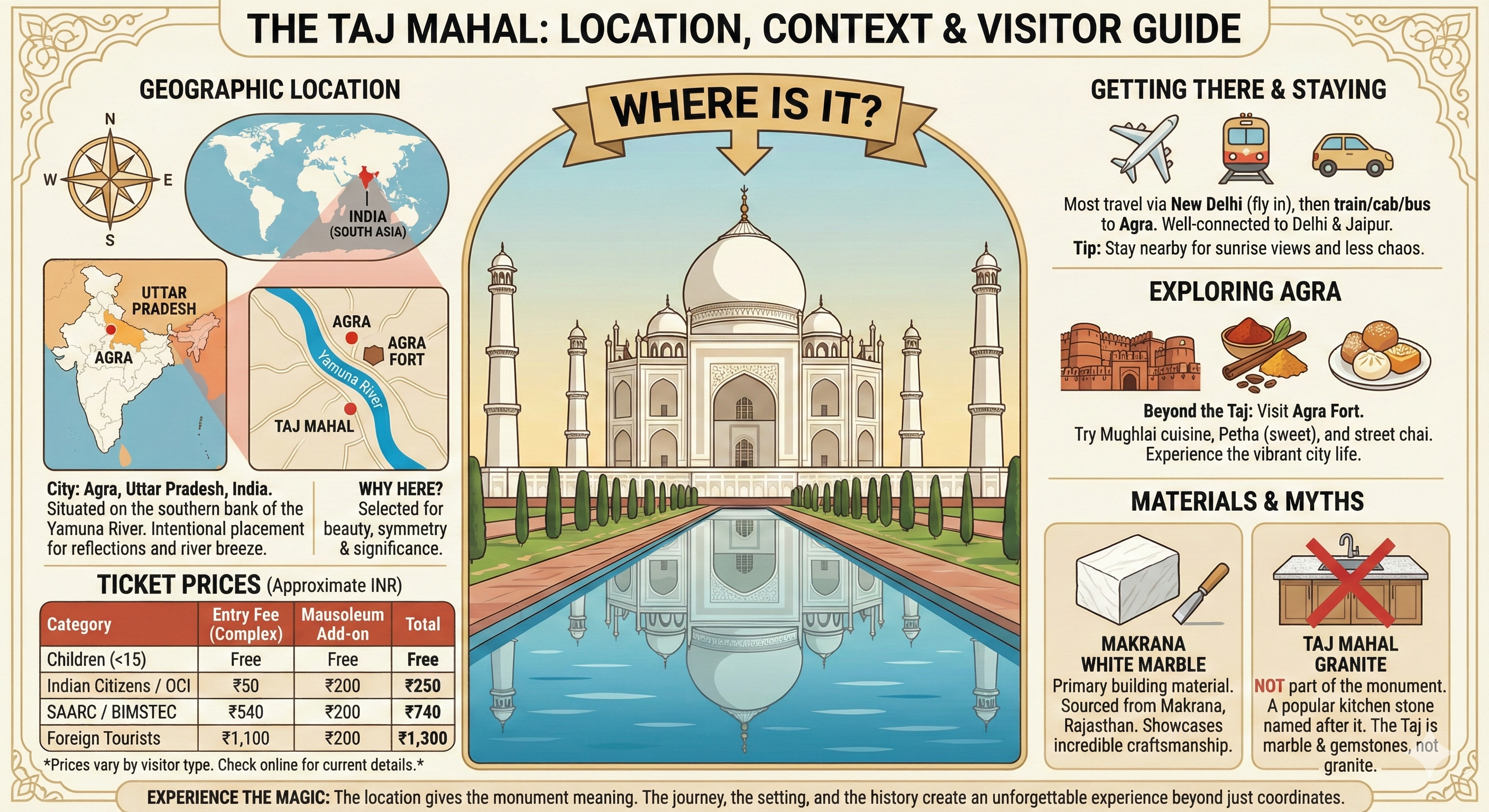
The Taj Mahal, a monument of Mughal architecture located on the south bank of the Yamuna River in Agra, Uttar Pradesh, India, is one of the most important historical sites in India and draws a great deal of tourism. It is located near Delhi and Jaipur and is easily accessible. The location where the Taj Mahal stands was specially selected for the beauty and significance of that location, which makes the monument even more visually pleasing. Those visiting the Taj Mahal should consider staying at one of the hotels or in other accommodations in proximity to the monument so they can view it from different perspectives (e.g., in the morning when the light is a certain color, etc.), and the price to enter the Taj Mahal varies based on what type of visitor you are. The Taj Mahal was constructed from white marble from Makrana and it is a testament to the high level of craftsmanship and artistry involved in its construction. The setting and unique history surrounding the Taj Mahal are what make visiting the Taj Mahal such a great experience while visiting India.
Where Exactly Is the Taj Mahal? (Yes, the Real Taj Mahal Location)
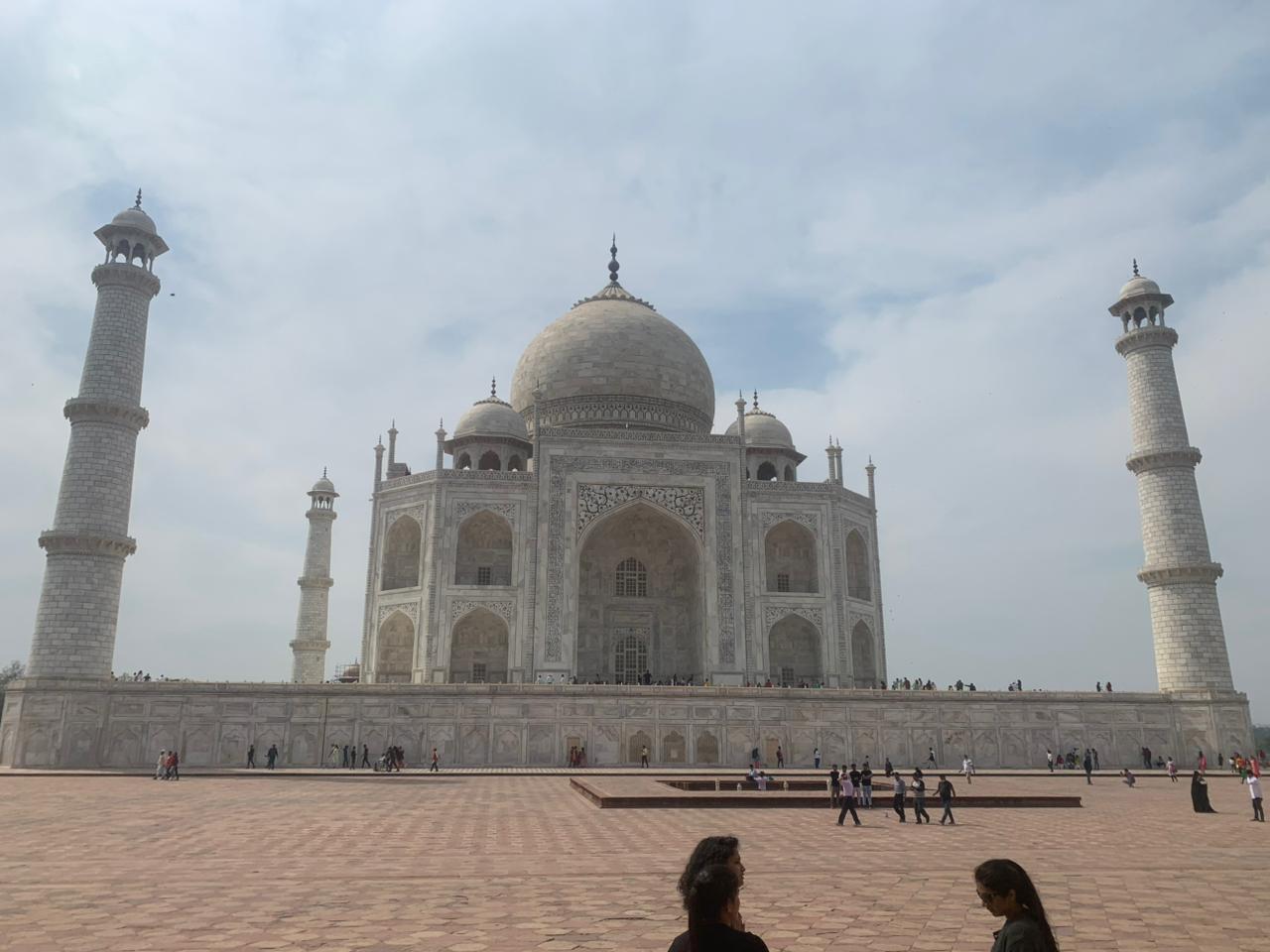
The Taj Mahal is in Agra, India, which is a historic city in the north of the country.Agra sits in the state of Uttar Pradesh, so if you've ever wondered “Taj Mahal location in which state?” — there you go: Uttar Pradesh.
The Taj sits peacefully along the Yamuna River, specifically on the southern bank. That positioning wasn’t random—it was intentional, elegant, and genius. The reflections, the symmetry, the cool river breeze the Mughal architects knew what they were doing.
Some people search for the location of Taj Mahal Agra to be sure they’re heading to the right spot, and honestly, smart move—India is BIG. And chaotic. And magical. But mostly big.

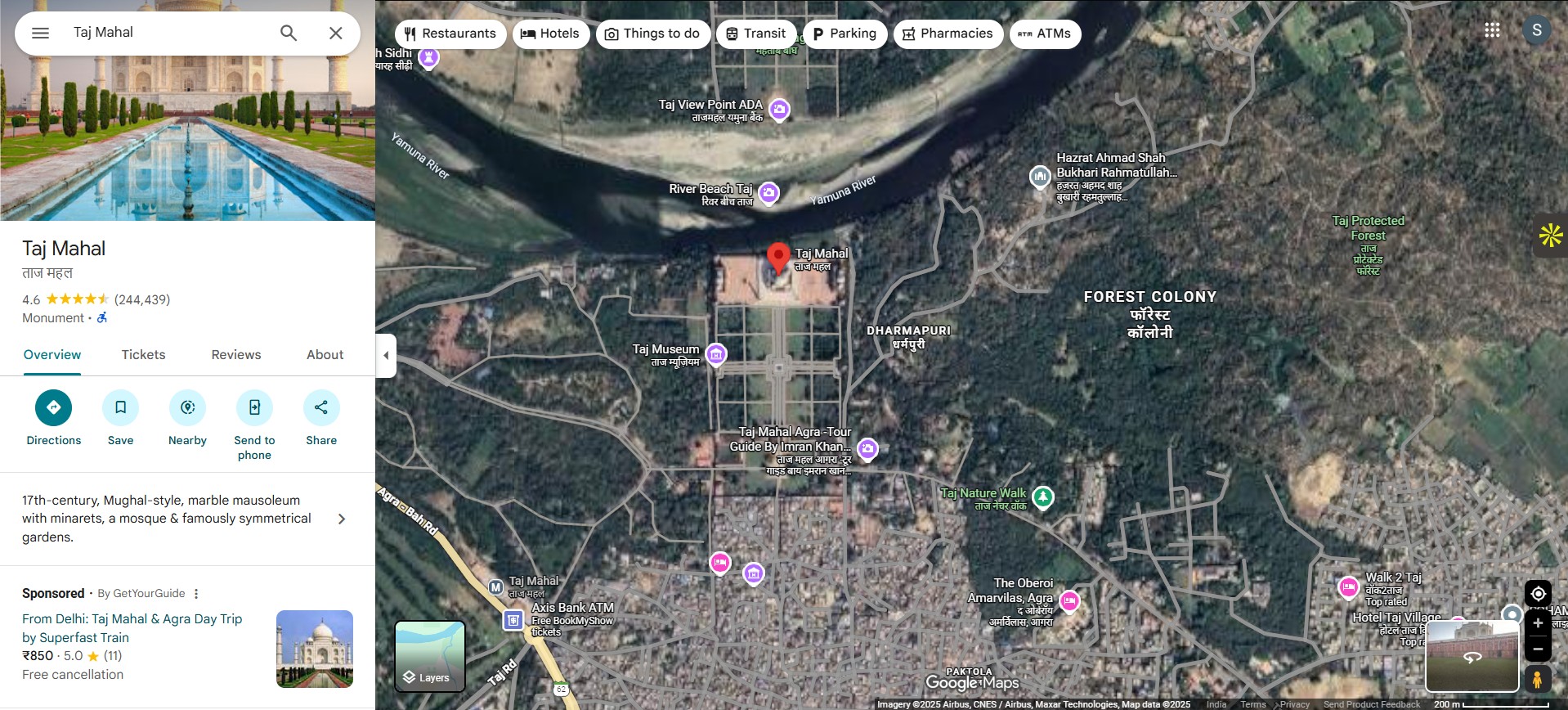
A Quick Peek at a Taj Mahal Location Map
If you're the visual type (like me—because GPS exists for a reason), grab a Taj Mahal location map online. Zoom in. Zoom out. Then zoom back in because you overshot and now you’re looking at Nepal.
On a proper map:
- India looks like a giant triangle.
- Uttar Pradesh sits towards the north-ish-central area.
- Agra rests along the Yamuna River, kind of leaning into it.
- And right there, like a marble jewel—boom—the Taj Mahal.
Seeing it on a map makes it feel real. Like—oh okay, this is happening.

Taj Mahal Location on World Map (Because Perspective Helps)
Sometimes people like to step back and see things on a massive scale. Looking at a Taj Mahal location on world map feels wild. India, which is in South Asia, stands out with confidence. The monument isn't just a dot; it's a well-known cultural symbol.Kind of like Beyoncé but made of marble.
And when you finally zoom into the Taj Mahal Agra India region, you notice how cleverly connected Agra is—to Delhi, Jaipur, and other major travel points. It's almost as if tourism was expected centuries before tourism existed.
Exploring Agra: More Than Just the Taj
Okay—yes, the Taj Mahal Location matters, but once you're in Agra, the city itself feels alive with history. Mughal architecture everywhere. Spices in the air. Rickshaws honking. Kids chasing balloons. Stray dogs sunbathing like they own the place.
Right next door? Agra Fort. A massive red sandstone fortress that looks like it walked straight out of a medieval fantasy film.
And then there’s the food—oh boy.
If you haven’t tried:
- Mughlai gravy dishes
- Petha (a sweet)—sticky and weird at first, but delicious
- Street chai served boiling hot
are you even visiting?

Planning a Visit: Because Logistics Matter Too
Once you've figured out the Taj Mahal location in India, the next step is planning. Most travelers fly into New Delhi and then take a train, cab, or bus to Agra. Some people choose to stay near the Taj—a clever idea if you want sunrise views.
A few travelers even search taj mahal near hotel because staying closer means less chaos and more time staring at marble perfection.

Tickets and Entry: Don’t Forget the Practical Stuff
Before visiting, check out taj mahal ticket details online. Prices vary for locals, foreigners, and sometimes children. You can buy:
|
|
|
|
|
|
|
|
|
|
|
|
|
|
|
|
|
|
|
|
|
|
|
|
|
Wait—What About Taj Mahal Granite and Taj Mahal Stone?
Some travelers get curious about what the monument is actually made of. (Hey, nothing wrong with being a nerd—someone has to care about architecture.)
- Taj Mahal stone refers mainly to the iconic white marble sourced from Makrana, Rajasthan.
- Sometimes people confuse it with taj mahal granite, which is actually not a building material of the Taj Mahal but a popular type of kitchen stone named after it. (Funny how the monument inspired countertops.)
So no—you won’t find granite walls inside the actual Taj. Just insane craftsmanship with marble and gemstones.

Side Note: Taj Mahal Restaurant & Lounge — Not What You Think
At some point during your search, you’ll stumble upon taj mahal restaurant & lounge listings.
No—it’s not inside the monument. It's just one of the many businesses using the name (and the vibes) because why wouldn’t you? The name sells itself.
Some of these restaurants have stunning décor, some are cozy, and some—well—let’s just say reviews are helpful.

Taj Mahal Agra Location: The Feel Before You See
This part is hard to explain. At first glance, the Taj Mahal Agra location looks pretty normal, with busy roads, shops, and tourists everywhere. But then you walk closer, and the chaos fades a little.
There’s this moment—right when you pass through the main gate—and the Taj appears. Floating. Perfect. Too perfect.
You pause. Blink. You could even say "wow" or something less poetic like "holy crap." And all of a sudden, the trip—maps, planning, and confusion—seems worth it.

Final Thoughts
You now know where the Taj Mahal is: it's on the Yamuna River in Agra, Uttar Pradesh. You can easily find it on any map, GPS, travel guide, or travel blog. But it's not just about the coordinates. The location gives the monument meaning, changes the experience, and makes it even more magical. It wasn't a random choice to build the Taj Mahal; every inch of its site was carefully chosen, from the way the river reflects off of it to the gardens that surround it. The light on the white marble, the gentle flow of the river, and the busy city around you all make the history and beauty come alive in a way that maps can't.
When you take your last picture, eat your last plate of Mughlai curry, or argue about whether the marble really glows or if it's just sunlight playing tricks, you'll realize that the trip itself is part of the memory. Get your shoes on and get your camera ready. Go to the Taj Mahal in Agra, India. Knowing where it is is one thing, but being there, feeling it, and seeing it with your own eyes is a whole other thing that you will never forget
FAQs.
Q1: How long did it take to build the Taj Mahal?
It took approximately 22 years to build the Taj Mahal.
Q2: Taj Mahal location in which state?
The Taj Mahal is located in Uttar Pradesh, India.
Q3: Why was the Taj Mahal constructed?
It was built by Emperor Shah Jahan in memory of his wife Mumtaz Mahal as a symbol of love.
Q4: How long did it take to build the Taj Mahal?
The Taj Mahal took 22 years to complete, from 1632 to 1653.
Q5: What color is Taj Mahal quartzite?
Taj Mahal quartzite is typically a soft white or creamy beige with subtle grey or gold veining.