
 Nov 25,2026
 By:
Quick Summary
- For historic atmosphere, Prague's Old Town Square and Nuremberg's central market offer the strongest sense of old European town life.
- For food and drink, Strasbourg and Vienna give visitors a wide range of local snacks, sweet pastries, and warm drinks.
- For crafts and gifts, Nuremberg and Cologne have large selections of handmade ornaments, wood carvings, and textiles.
- For budget-conscious travelers, Budapest and Prague are generally less expensive than Vienna or Cologne.
- Combining two or three nearby cities by rail often gives more variety than staying in one place for a full week.
How Europe's Famous Christmas Markets in Europe Were Selected
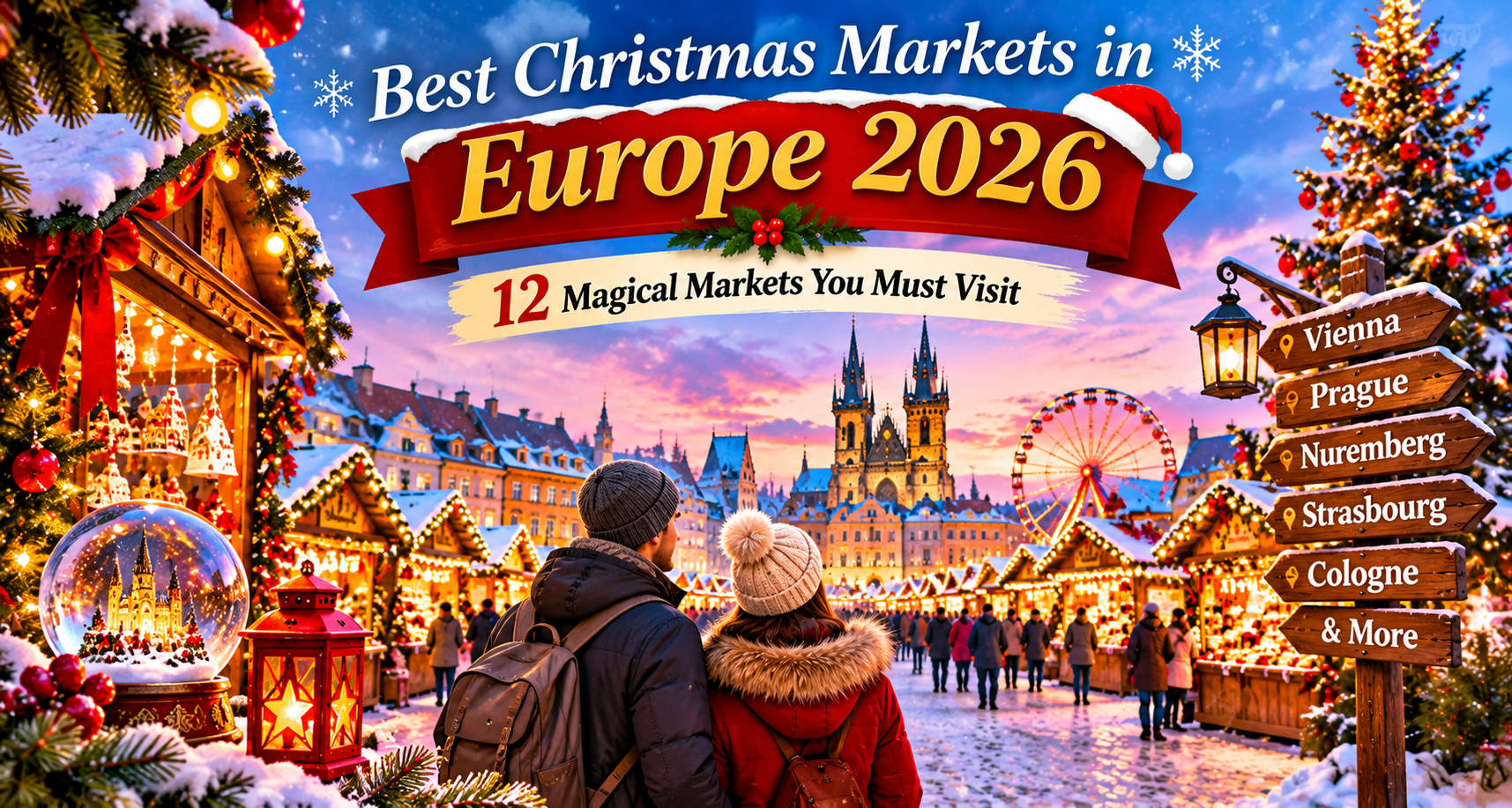
This list ranks markets against five practical criteria: historic setting, size and range of stalls, quality of food and crafts, ease of reaching the city from other destinations, and overall cost for visitors. Fame alone did not decide a place on the list. Several large markets were left out because their character is closer to a fairground than a town square, and a few smaller ones made the cut because they offer a clearer sense of local tradition.The twelve markets covered are Vienna, Strasbourg, Nuremberg, Prague, Budapest, Cologne, Munich, Dresden, Salzburg, Tallinn, Copenhagen, and Bruges. Each has its own strengths, and no single city wins every category. The best choice depends on whether you want classical music and cafés, a walkable border-town mix of cultures, or a slower pace with fewer crowds.
Historic Christmas Markets in Vienna, Prague and Nuremberg
Vienna Christmas market 2026 visitors will find stalls set within the city's grand squares, and the setting does much of the work. The stalls around the Rathaus are framed by Neo-Gothic architecture, and the surrounding cafés make it easy to pair a walk with a slower break indoors. Many visitors combine the market with a concert or an evening in one of the city's traditional coffee houses. Vienna is one of the more expensive options on this list, especially for accommodation.Prague's Old Town Square offers a different mood. The medieval Astronomical Clock and the twin spires of the Týn Church create an unusually dramatic backdrop, and the market spills into the surrounding streets in the evening. Prague's crowds can be dense on weekends, so early or late visits tend to be more pleasant. Its costs are generally lower than Vienna's, which makes it a practical base for a longer stay.
Nuremberg's is one of the best-known markets in Germany Christmas market destinations, and its central square fills with stalls selling gingerbread, handmade tree decorations, and wooden toys. The city's Lebkuchen, a spiced gingerbread, is a good place to start for first-time visitors. Nuremberg's medieval old town is compact, so most of its main sights can be reached on foot.
Food, Local Crafts and Festive Traditions in Strasbourg, Budapest and Cologne
Strasbourg blends French and German traditions in a way that few other markets do. Stalls around the cathedral and the central squares serve regional specialties such as bredele, small, spiced biscuits, alongside mulled wine and hot savory dishes. Because the city is small and walkable, it suits visitors who want a relaxed pace and a clear view of the market without long transfers.Budapest's markets, held in squares such as Vörösmarty tér, are known for chimney cake, a sweet pastry baked around a rotating spit and dusted with sugar or cinnamon. The city also has a strong tradition of handmade crafts, and visitors often find ceramics, embroidered textiles, and carved wooden figures. Budapest is one of the more affordable cities on this list, and its thermal baths make a useful counterpoint to a cold day outdoors.
Cologne's market sits in the shadow of its Gothic cathedral, which gives the city an unmistakable backdrop. The market is large and busy, and its food stalls and mulled wine huts keep the atmosphere lively into the evening. Cologne is well connected by rail, which makes it an easy addition to a Germany-focused route.
Nearby Attractions and Other Cities Worth Visiting
Several of these markets work well as part of a wider trip. Salzburg is a short rail journey from Munich, and its old town and hilltop fortress offer a quieter winter contrast to the bustle of larger markets. Munich's Marien Platz hosts one of Bavaria's best-known markets, and the city's palaces and museums can fill a full day alongside it. Dresden's historic centre, with its rebuilt baroque landmarks, gives visitors a strong sense of place in eastern Germany.Tallinn's Town Hall Square is one of the best-preserved medieval squares in northern Europe, and its market is compact enough to explore in an afternoon. Copenhagen's Tivoli Gardens are decorated for the season, and the nearby city centre offers shopping and museums. Bruges, in Belgium, has a small but attractive market and a canal-side old town that is especially photogenic after dark.
Christmas Market Opening Dates, Travel Costs and Transport Options
Opening dates vary by city and by year. Most markets begin in late November and continue until a day or two before Christmas, though some run later and others close on Christmas Eve. Dates should always be checked on each market's official website before you book, since they are set annually and can change without much notice. Christmas market dates in Europe are worth confirming early, because a few markets adjust their schedules from one season to the next.Travel costs also differ widely. Flights, accommodation, and food prices change through the season, and December demand can push hotel rates up sharply, particularly in Vienna, Cologne, and Munich. As a general guide, Budapest and Prague tend to sit in the lower cost range, Nuremberg and Strasbourg in the middle, and Vienna and Copenhagen toward the higher end. Market entry is often free, though some attractions and special areas charge a fee.
Rail is the most practical way to link many of these cities. Vienna, Prague, and Budapest are connected by direct or near-direct services, and Germany's network links Nuremberg, Munich, Dresden, and Cologne. Strasbourg is well connected to Germany and France by rail as well. Plan for cold weather, book accommodation early for late December, and keep a note of closing days for each market on your route.
Conclusion
Pick your markets by travel style and budget rather than by fame alone. Couples who want atmosphere and classical music may prefer Vienna, while families and food lovers may find Strasbourg or Nuremberg more rewarding. Solo travelers with a smaller budget can build a rail route through Prague and Budapest. Whichever Best Christmas markets in Europe you choose, save the shortlist that suits you, then check each market's official site for current dates before you book. Keeping Europe Christmas markets, 2026 plans grounded in verified dates avoids the most common disappointment of a winter trip.
Also Read:
Best Places To Spend Christmas In The World: 15 Magical Destinations For 2026
Dubai Trip Cost From India For Family: 5-Day Budget For 4 People (2026)
Thailand Solo Trip From India: Budget, Safety & 7-Day Itinerary (2026)
