
 Aug 26,2026
 By:
By: Overview
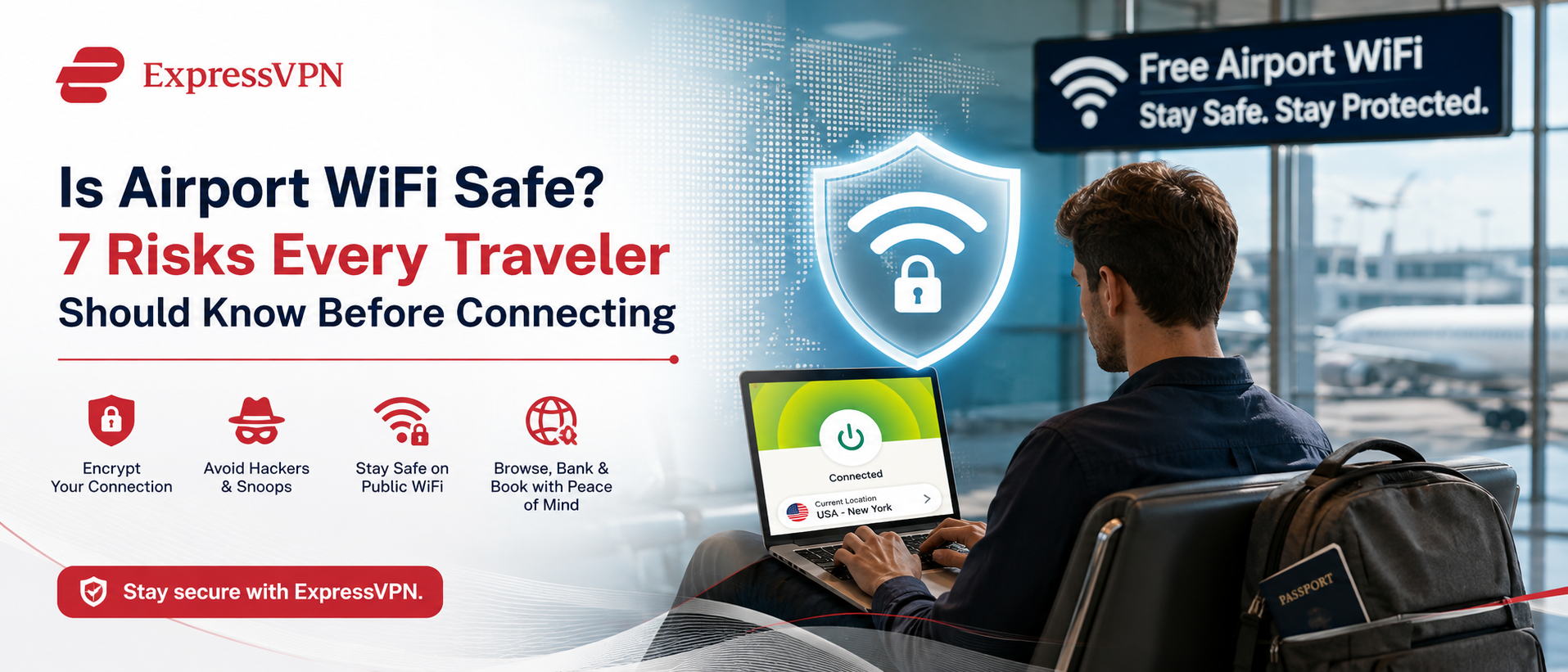
Stay secure with ExpressVPN.Picture the scenario: a long layover, a dying phone battery, and that little "Free Airport wifi" network practically begging to be clicked. Most travelers connect without thinking twice. Who has the time to consider security when a flight is boarding in twenty minutes? But here's the thing about airport wifi safety. It's not as simple as it looks on the surface. Those open networks are convenient, sure, but they're also a favorite playground for hackers who know travelers are distracted, worn out, and just trying to get online fast. So is it worth the risk? Let's dig into what's really happening behind that "Connect" button and why so many frequent flyers now treat a VPN like ExpressVPN as essential travel gear, right up there with a passport and a phone charger.
Why Airport wifi Safety Actually Matters
Think about how many people pass through a single terminal in a day. Thousands, easily. Now think about how many of them are joining the same WiFi network at the same time. That's the real story behind airport wifi safety. It's not that airports are secretly out to get anyone. It's just that shared, open networks create the perfect environment for bad actors to blend in unnoticed.Risk 1: Unencrypted Networks Are Basically an Open Book
Many airport hotspots don't bother encrypting traffic at all. That means data moves across the network in plain text, readable to anyone with the right and honestly not-that-advanced tools. This is exactly why the question is airport wifi safe comes up so often, especially before logging into a banking app on a whim. The fix is refreshingly simple, though. Encryption tools, like a solid VPN, close that gap almost instantly.Risk 2: Fake Hotspots and "Evil Twin" Traps
Ever notice two networks with nearly identical names? "Airport wifi" and "Airport wifi Free"? One of those might be a trap. Scammers set up lookalike hotspots, often called "evil twins," specifically to catch travellers who connect without checking. It happens more than people realize. Confirming the official network name with staff takes ten seconds. A VPN adds backup protection too, encrypting traffic even if someone accidentally connects to the wrong one.Risk 3: Man-in-the-Middle Attacks (Sneakier Than They Sound)
This one's a bit unsettling. An attacker quietly slips between a device and the internet, intercepting everything that passes through, and there are often zero warning signs. It just happens in the background while someone scrolls through emails, totally unaware. This risk sits at the center of most airport wifi safety discussions for good reason. A strong VPN encrypts that connection end to end, so even intercepted data turns into useless scrambled nonsense.Risk 4: Malware Hiding in Plain Sight
Some compromised networks push malicious software through fake login screens or sudden pop-ups. Annoying, sketchy pop-ups asking to "update" something out of nowhere? Red flag. That kind of malware can track keystrokes, steal files, or just quietly slow a device to a crawl over time. Skipping unnecessary downloads and staying skeptical of odd prompts helps a lot. Pairing that instinct with dependable security software, VPN included, adds real, meaningful protection.Risk 5: Session Hijacking, aka Stolen Logins
Session hijacking lets someone take over an already-active login (email, social media, whatever) without ever needing a password. Public WiFi can create additional opportunities for session hijacking, particularly on poorly secured connections. Logging out after use helps. Two-factor authentication helps more. However, the best VPN for public wifi is the real MVP here, as it encrypts session data, making hijacking significantly more difficult.Risk 6: Data Sniffing in Crowded Terminals
Hundreds of devices share a network, while data sniffing tools quietly capture any unencrypted traffic. Airports are basically a goldmine for this kind of thing, purely because of the sheer number of people connecting at once. Business travellers handling sensitive files should take this one seriously. A VPN scrambles that data into something unreadable, keeping it hidden from anyone sniffing around (literally).Risk 7: Getting Quietly Tracked
Some networks log more than people expect. Frequent routes, travel patterns, and personal preferences, all pieced together over time. It's not always malicious, but it still feels a little invasive, doesn't it? Limiting location sharing and utilizing privacy tools helps keep that data more secure. A VPN masks the device's IP address, adding a layer of anonymity that makes tracking a whole lot harder to pull off.Quick Risk Overview
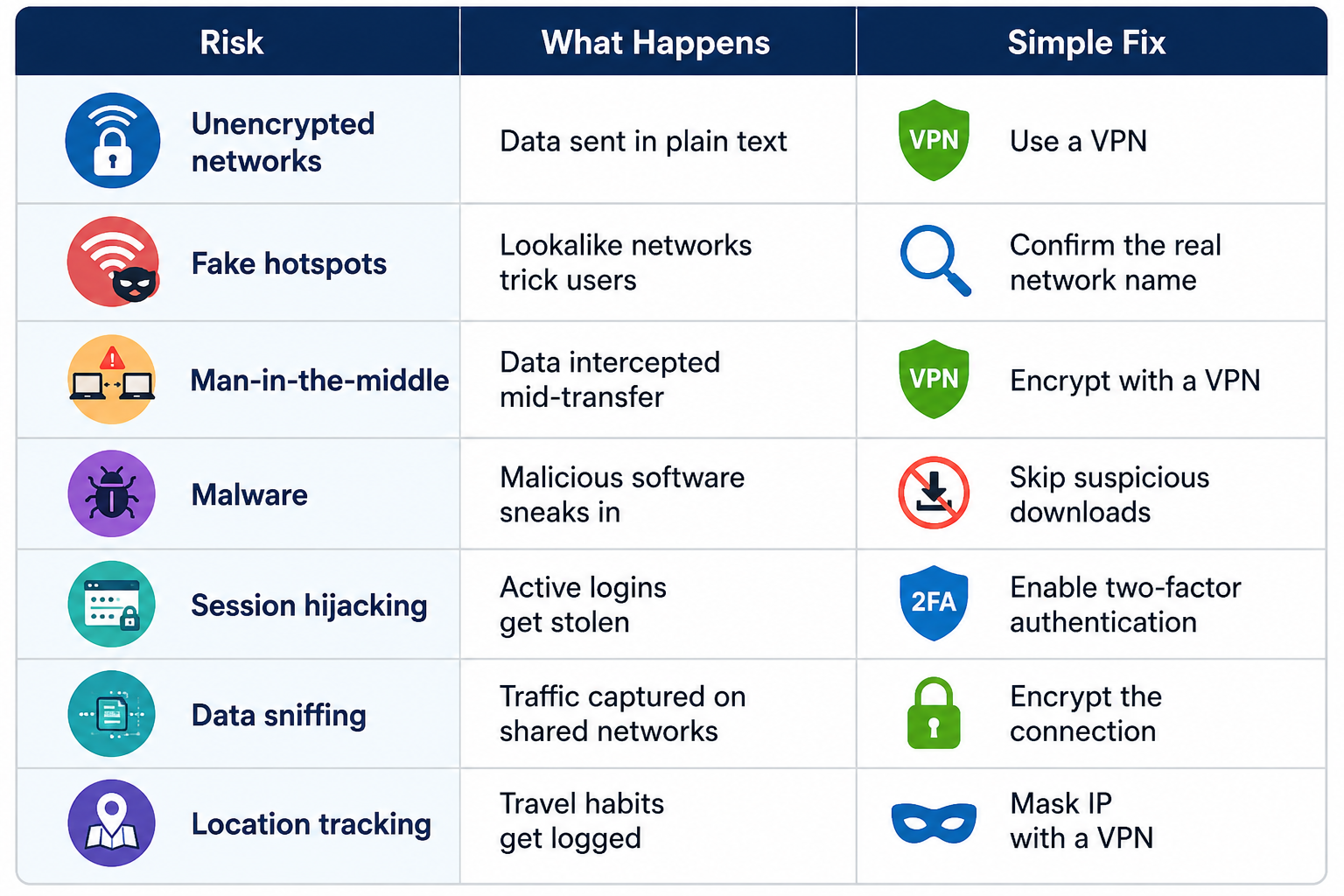
Finding the Best VPN for Public WiFi
What are the key features that define the best VPN for public wifi? Strong encryption, obviously. A strict no-logs policy. Fast servers that don't turn video calls into slideshows. Additionally, the apps are designed to be simple enough to use even when you are half-asleep in a boarding line. ExpressVPN checks every one of those boxes without much fuss. It runs quietly in the background, doing its job, so the only thing left to focus on is catching that flight.Why ExpressVPN Fits Right Into a Travel Bag
A few reasons ExpressVPN keeps showing up on travelers' must-have lists:- Bank-level encryption on every single connection
- A strict no-activity-logs policy, genuinely reassuring
- Thousands of fast servers scattered across the globe
- Simple, one-tap apps for phones, laptops, tablets, and all of them
- Customer support that's actually available around the clock
Small Habits, Big Difference
- Confirm the official network name with airport staff always
- Skip entering passwords on public WiFi without a VPN running
- Turn off automatic WiFi connection settings before traveling
- Keep devices updated; patches matter more than people think
- Use a trusted VPN like ExpressVPN every time, no exceptions
Final Thoughts
Airport wifi isn't going away anytime soon, and honestly, neither is the convenience it offers. The real question was never whether to use it. It's about how to use it smartly. Once these seven risks are on the radar, the answer to is airport wifi safe gets a lot clearer and a lot less scary. Small habits matter. Checking the network name matters. But pairing those habits with a dependable VPN is really what closes the gap between a risky connection and a secure one. ExpressVPN has become something of a quiet travel essential for exactly that reason, encrypting data, hiding browsing activity, and letting layovers feel a little less like a security gamble. Next time boarding gets announced, and that WiFi prompt pops up, airport wifi safety doesn't have to be an afterthought. Using ExpressVPN can be as simple as packing a charger; it's one more thing that is already taken care of.Stay secure with ExpressVPN.
Experience the world with Travelnags. Your trusted travel companion - guides, budget advice, destination tips and good deals to help you travel smarter, cheaper and better, together!
Read More Blogs:
How Much Does It Cost To Build A PC? Budget Breakdown 2026
Agoda Review 2026: Is Agoda Safe And Worth Booking With?
How To Book Your FlixBus Ticket In Under 5 Minutes, Step-by-Step